How to stop puppy biting (without yelling)
Simple, consistent techniques that teach bite inhibition and protect your hands.
Quick answer
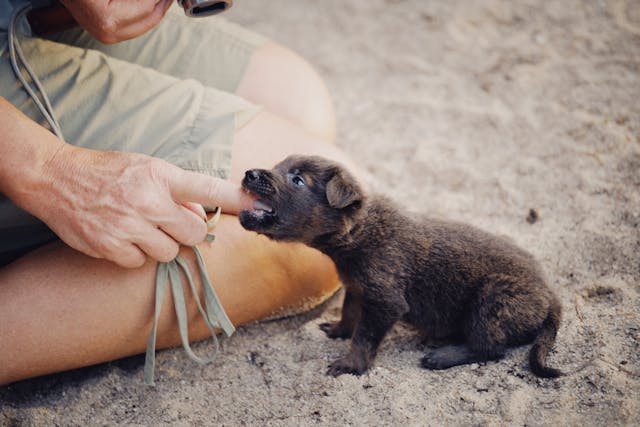
Puppy biting usually means your puppy is overstimulated, teething, or trying to play. Redirect to a chew, reward calm play, and end play for a few seconds when teeth touch skin. Consistency beats intensity.
Why puppies bite
- Teething and exploration
- Overstimulation or tiredness
- Play style: puppies learn boundaries through feedback
What to do when biting happens
- Freeze for 1–2 seconds (don’t pull away fast, it triggers chase)
- Offer a chew or toy and praise when they switch
- If they keep biting, end play for 10–20 seconds (stand up, step away, or use a pen)
- Resume calmly and repeat
What not to do
- Don’t hit, shout, or scare the puppy
- Don’t play rough hand games
- Don’t reward biting by continuing exciting play
Prevent it
- Short play sessions, frequent naps
- More sniff walks and brain games
- Rotate chews and toys so they stay interesting
Related: First Dog Checklist
FAQ
Is puppy biting normal?
Yes. Most puppies mouth and bite while they learn how to play, explore, and manage teething. The goal is to teach gentle behavior and give them the right outlets.
How long does it take to improve?
Many pups improve within a few weeks of consistent practice. Teething phases can cause setbacks, so keep redirecting, rewarding calm play, and protecting nap time.
When should I get professional help?
If biting is frequent, intense, breaks skin, or seems driven by fear or guarding, involve a qualified trainer or behavior professional. If you suspect pain or health issues, check with your vet.
Next step
Want a breed match that suits your energy level and routine?
Find the best pet for your lifestyle
Want a quick, practical recommendation instead of browsing?
Start the quizFind the best dog breed for your lifestyle
Already leaning toward a specific breed? Get a shortlist that fits your home and routine.
Find the best dog breed for me