
Stop bird biting without punishment: a calm plan that actually works
Understand why birds bite and use a simple behavior plan to reduce bites fast without yelling, tapping beaks, or forcing hands.
Quick answer
Birds bite to create distance or control a situation. The fastest fix is to prevent rehearsals: learn the warning signs, remove pressure, and reward the behaviors you want (stepping up, targeting, calm perching). Punishment often increases fear and makes bites worse.
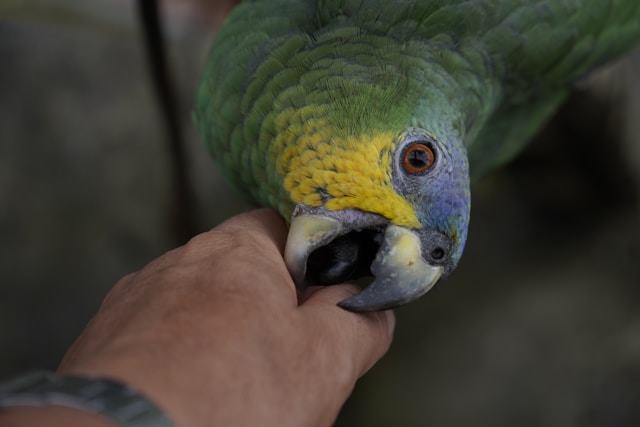
Step 1: identify the bite type
Most bites fall into one of these buckets:
- Fear bite: the bird feels trapped or rushed
- Boundary bite: “do not touch me there”
- Hormonal bite: seasonal behavior, nest guarding
- Overstimulation bite: too much excitement or handling
Different cause, different solution.
Step 2: learn the warning signs
Common signals before a bite:
- stiff posture, leaning away
- pinned eyes (some species)
- feathers slicked tight or flared aggressively
- beak open, tongue visible
- rapid head movements or lunging
If you see these, pause and create space.
Step 3: remove the pressure point
Examples:
- If hands scare the bird, start with a training perch.
- If the bird bites near the cage, move training to a neutral spot.
- If the bird guards a corner or a box, remove the nest trigger.
Step 4: train a replacement behavior
Choose one:
- Target training: touch a stick target, get a treat
- Step-up: predictable hand or perch cue
- Station: stay on a perch while you change bowls
Reward the replacement behavior every time at first.
Step 5: handle setbacks the right way
Do not yell. Do not flick the beak. Do not force step-up.
Instead:
- Put the bird down safely
- Reduce the difficulty next session
- Keep sessions short and successful
When to get help
If bites are severe, sudden, or paired with health changes, consult an avian vet first. Pain can drive aggression.
FAQ
Does ignoring biting work?
Only if you also prevent the situations that cause it. If the bird keeps getting pressured, bites will continue.
Is it normal for birds to bite sometimes?
Yes. Your goal is to reduce frequency and intensity, and to make interactions predictable and safe.
What if my bird bites one person more?
That often means one person moves faster, uses different cues, or triggers fear. Align handling style and rebuild trust with treats.
Next step
Once biting is decreasing, focus on a daily routine with enough sleep and enrichment. Bored, tired birds bite more.
Find the best pet for your lifestyle
Want a quick, practical recommendation instead of browsing?
Start the quizFind the best bird for your lifestyle
Already leaning toward a specific breed? Get a shortlist that fits your home and routine.
Find the best bird for me